William Watts Sherman House, Newport, Rhode Island

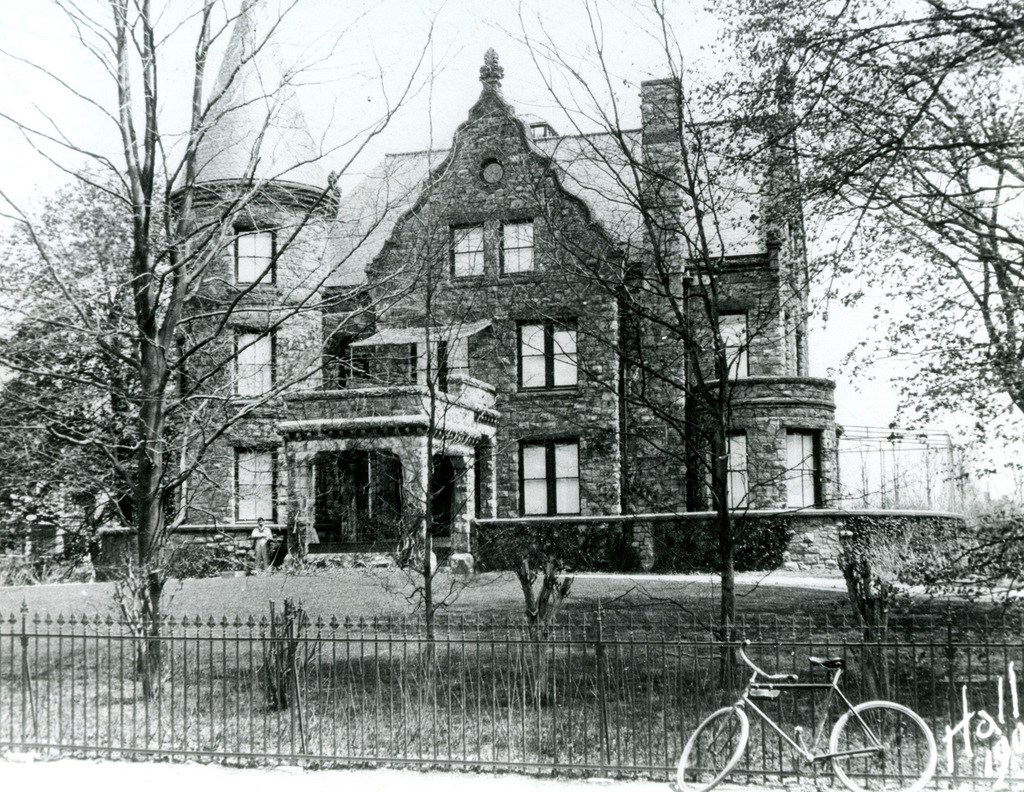
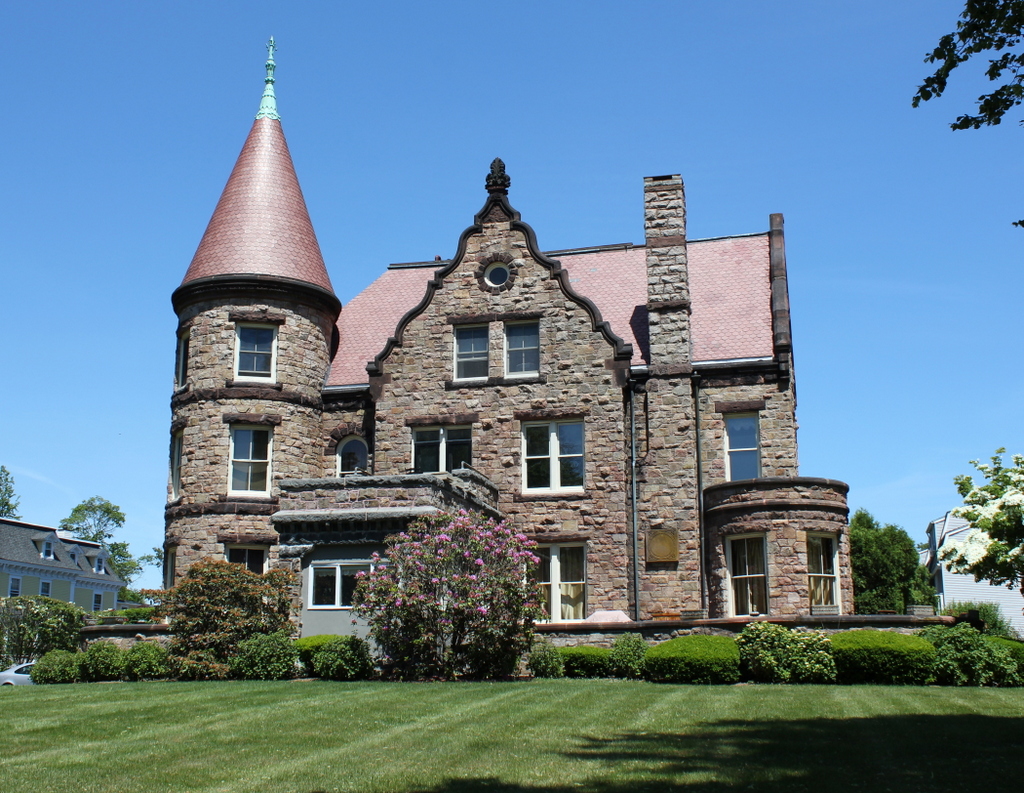
The William Watts Sherman House on Shepard Avenue in Newport, sometime in the late 1870s. Image courtesy of the Cornell University Library, Andrew Dickson White Architectural Photographs Collection.

The house in 2017:
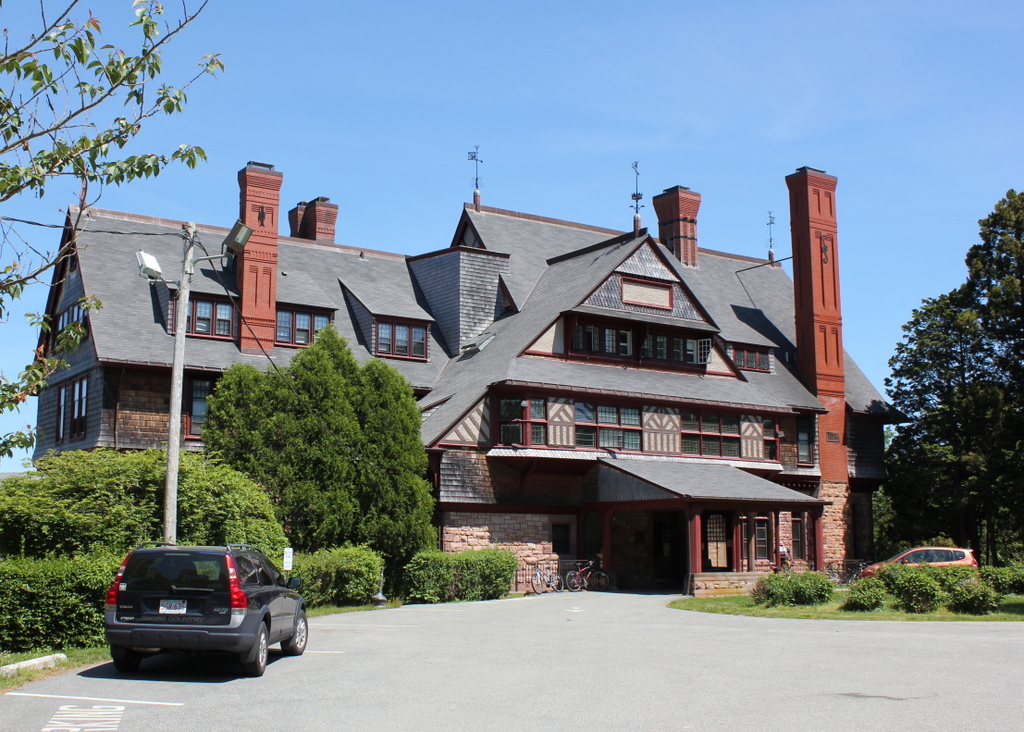
William Watts Sherman was born in Albany in 1842, and later moved to New York City, where he became a physician. However, he left the medical practice to enter his father’s banking firm of Duncan, Sherman & Company, and became a wealthy businessman. In 1871 he married Annie Wetmore, the daughter of prominent merchant William Shepard Wetmore. Originally from Vermont, Wetmore had been among the early summer residents in Newport, and built his Chateau-sur-Mer mansion on Bellevue Avenue in 1852.

A few years after their marriage, the Shermans built their own house on part of Annie’s late father’s property, just to the south of Chateau-sur-Mer on the opposite side of Shepard Avenue. For the design, they hired Henry H. Richardson, a recently-established architect who was already well on his way to becoming one of the most influential in American history. He is best known for pioneering the Richardsonian Romanesque style that was prevalent throughout the late 19th century, and designed a number of churches, railroad stations, libraries, and other public buildings. He did not design many private residences, but the Sherman house would become one of his most important works and would help to inspire the Shingle style of architecture that would go on to become ubiquitous in New England resort communities such as Newport.

Completed in 1876, the Sherman house was unlike anything that had been built in Newport up to this point. Most of the earlier homes had designs that were based on Greek, Italian, or French styles, but for this house Richardson blended elements from traditional English and American architecture, giving it a unique appearance that stood out among the other summer cottages in Newport. The house’s exterior, particularly the use of wooden shingles on the upper floors, proved highly influential, and the house became a prototype for Shingle-style architecture of the 1880s and 1890s. Richardson himself designed very few other houses, though, and  it would be two of his former assistants, Charles McKim and Stanford White, who would go on to create some of the finest Shingle-style homes.

Stanford White was involved in the design of the house, and he would play a larger role a few years later, when his firm of McKim, Mead & White was hired to design a large addition to the house. Built on the left side of the scene, this new wing substantially enlarged the house, while matching Richardson’s original exterior. The first photo here shows the house as it originally appeared, sometime before construction on the addition began in 1879. It was completed two years later, with Stanford White providing interior designs for both a parlor and a library in this wing.

William and Annie Sherman had two daughters, Georgette and Sybil, who were born in the early 1870s. However, Annie died in 1884 at the age of 35, and the following year William remarried to Sophia Augusta Brown, the 18-year-old daughter of the late John Carter Brown II. A member of the prominent Brown family of Providence, John Carter Brown II was the son of Nicholas Brown, Jr., the namesake of Brown University, and John himself would later leave leave his mark on the university when his rare book collection became the basis for the John Carter Brown Library. Curiously, William Sherman’s oldest daughter, Georgette, would later marry Sophia’s older brother, Harold Brown, making William Sherman both a brother-in-law and father-in-law to his daughter’s new husband.

With his new wife, William Watts Sherman had two more daughters, Irene and Mildred, and around 1890 they expanded the house again, adding a ballroom that was designed by local architect Dudley Newton. He continued to spend summers here until his death in 1912, and Sophia owned the house until her death more than 30 years later, in 1946. By this point the massive Gilded Age mansions of Newport had fallen out of fashion, and the mid-20th century saw many of these landmarks demolished or converted into other uses. In the case of the Sherman house, it became the Baptist Home of Rhode Island, a retirement home that opened in 1950.

Because of its architectural significance, the house was designated as a National Historic Landmark in 1970, and it is also a contributing property in the Bellevue Avenue Historic District, which is likewise a National Historic Landmark. In 1982, the property was purchased by Salve Regina University, whose campus includes many other historic mansions in the area. It is now a dormitory for sophomore students, and still stands as one of Newport’s finest architectural treasures, with hardly any differences between these two photos aside from the 1879-1881 addition on the left side.
William G. Weld House, Newport, Rhode Island

The William G. Weld House on Bellevue Avenue in Newport, around 1903. Image courtesy of the Providence Public Library.

The scene in 2017:

The Weld family has long been a prominent family in Boston, with ancestors dating back to the 17th century in New England. Among the leading members of the family was William Gordon Weld, a prosperous merchant whose son, William Fletcher Weld, followed him into the shipping business. The younger William owned several dozen ships by the middle of the 19th century, and also had sizable investments in railroads and real estate. By the time of his death in 1881, he had an estate of approximately $20 million, or more than half a billion in 2018 dollars, and he left nearly all of it to his family.

William’s son, William Gordon Weld II, received a sizable inheritance, and a year after his father’s death he began construction on this summer residence on Bellevue Avenue here in Newport. The house was designed by local architect Dudley Newton, who designed a number of houses in Newport during the 1870s and 1880s. The exterior is made of locally-quarried granite, but its overall design is somewhat unusual here in Newport, with a Dutch Renaissance style that includes distinctive curved gables. On the interior, the house was finished with white oak paneling, and each room had its own fireplace in addition to steam heating. The house had seven bathrooms, and included other modern conveniences such as both gas and electric lighting, and the Newport Mercury predicted in 1883 that, “When completed, it will be one of the finest residences in Newport.”

The house was completed in 1884, and Weld went on to spend his summers here for more than a decade, until his death in 1896 at the age of 68. He and his wife, Caroline Goddard, had two sons, William and Charles, who were in their 20s when this house was completed. Both sons graduated from Harvard, with Charles eventually becoming a prominent physician as well as a philanthropist who made significant contributions to the Museum of Fine Arts in Boston and the Peabody Essex Museum in Salem. However, Caroline outlived both of her sons, and owned this home in Newport until her death in 1918.

By this point, Newport was beginning to fall out of favor as a wealthy resort community, and the many Gilded Age mansions were increasingly viewed as costly white elephants from a previous era. Many of these massive homes were converted into institutional use, including this house, which was sold by the Weld family in the early 1920s. It became the De La Salle Academy, a Catholic school for boys, and remained in use until it closed in the early 1970s. It was subsequently converted into condominiums, and today it is known as the De La Salle Condominiums. Despite these changes in use, though, this exterior view has changed very little, and the property forms part of the Bellevue Avenue Historic District, which is designated as a National Historic Landmark district.

Newport Casino, Newport, Rhode Island

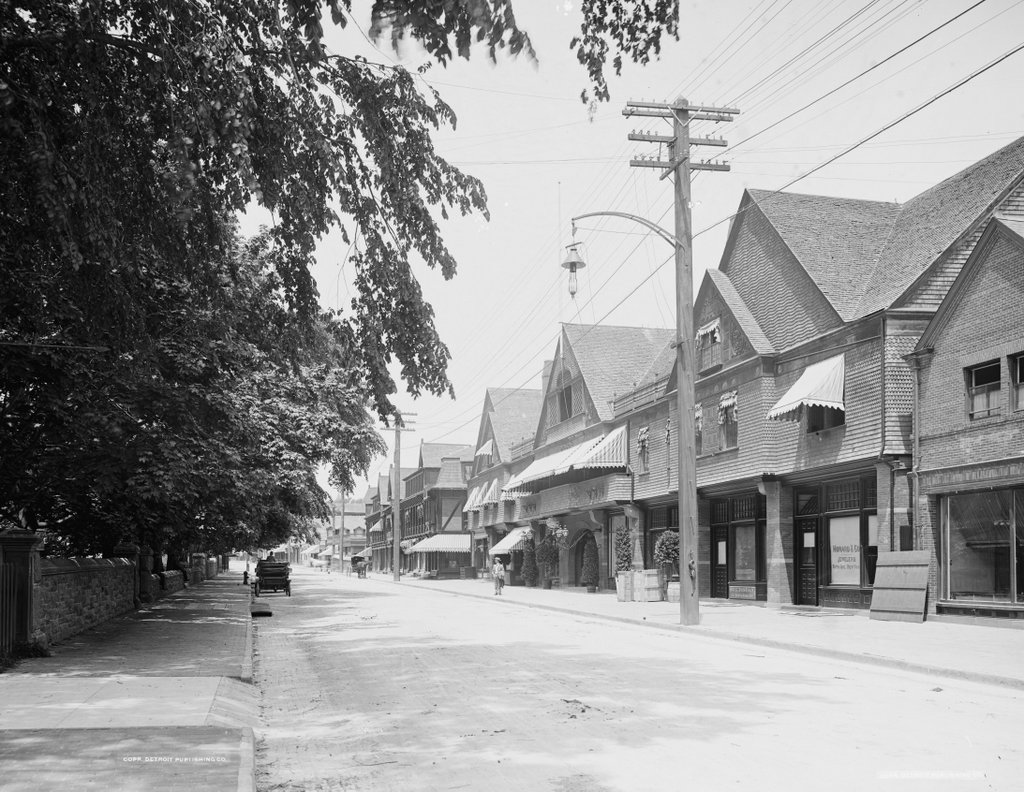
The Newport Casino on Bellevue Avenue in Newport, around 1900-1906. Image courtesy of the Library of Congress, Detroit Publishing Company Collection.

The scene in 2018:


One of Newport’s many architectural landmarks is the Newport Casino, which is located on Bellevue Avenue, just a little south of the present-day intersection of Memorial Boulevard. Its origins date back to 1879, when New York Herald publisher James Gordon Bennett, Jr., purchased the Stone Villa house on the west side of Bellevue Avenue, plus a vacant lot directly across the street where the Newport Casino would subsequently be built. Bennett had inherited a considerable fortune – including one of the nation’s leading newspapers – after his father’s death in 1872. Just 31 when his father died, the younger Bennett acquired a reputation as a flamboyant and eccentric member of New York society.

Bennett’s famously erratic behavior included an incident in New York in 1877, when he urinated in the fireplace during a party at his fiancée’s house. The resulting outrage ended their engagement and also resulted in a duel between Bennett and his would-be brother-in-law, although neither man was injured. Another oft-repeated – though probably apocryphal – incident happened in Newport in 1879 when, according to the tale, Bennett dared a friend to ride his horse onto the porch of the Newport Reading Room, an exclusive social club for the city’s elite. Supposedly, the friend lost his membership, and Bennett was said to have resigned his membership in protest before establishing the Newport Casino as a social club of his own.

Whether or not the story is entirely true, it speaks to Bennett’s reputation for impulsive behavior, and either way he soon began work on building the Newport Casino on the vacant lot opposite his Bellevue Avenue mansion. For the designs, he hired McKim, Mead & White, a newly-established architectural firm whose subsequent meteoric rise to prominence would be due in no small part to their work here on the Newport Casino. The result was an architectural masterpiece, which was built in 1880 as one of the first significant Shingle-style buildings. McKim, Mead & White helped to pioneer this distinctly American style of architecture, which would go on to become predominant in New England coastal resort communities in the late 19th century.

In 19th century terminology, a casino was not specifically a place for gambling, but instead referred more broadly to a social and recreational facility. At the time of the casino’s opening in the summer of Newport, the city had already been well-established as the premier summer resort for New York millionaires, and the casino quickly became its social center. The building offered a wide variety of amenities, including stores along the Bellevue Avenue facade, plus a restaurant, a ballroom, a theater, and tennis courts. Unlike the elite Reading Room, it was also less exclusive, with both the wealthy members and the general public able to enjoy the facilities.

The casino would go on to play an important role in the early history of tennis. Originally referred to as lawn tennis, so as to distinguish it from the earlier game of court tennis, the sport came to America in the 1870s and was played under a variety of rules until 1881, when the United States National Lawn Tennis Association – today’s United States Tennis Association – was established to standardize the rules of the sport. Given its reputation as an affluent summer resort, Newport was chosen as the site of the association’s first championships in 1881, with the newly-built Newport Casino serving as the site for both the men’s singles and men’s doubles championships.

The men’s doubles championships would be played here at the Newport Casino for the rest of the 1880s, and the men’s singles championships through 1914. During this time, the sport was dominated by Richard Dudley Sears, a Boston native and Harvard student who won the first seven singles championships from 1881 to 1887, plus the doubles championships from 1882 to 1887, before retiring from the sport at the age of 26. In later years, other prominent winners here included Oliver S. Campbell and Malcolm D. Whitman, who each one three singles titles, and William Larned, who won in 1901, 1902, and from 1907-1911.

In 1915, the tennis championships were moved to the West Side Tennis Club in the Forest Hill neighborhood of Queens, which was more conveniently located and could accommodate more spectators. The Newport Casino continued to be used for other tennis events over the years, but both the building and the city entered a decline in the first half of the 20th century, as Newport began to fall out of fashion as a summer resort. Many of the Gilded Age mansions were demolished in the middle of the century, including James Gordon Bennett’s house across the street from here. Demolished in 1957, the site of his Stone Villa is now a shopping plaza, and a similar fate nearly befell the Newport Casino, which had been threatened with demolition a few years earlier.

The Newport Casino was ultimately preserved, though, thanks to the efforts of Jimmy Van Alen, a Newport native and former court tennis champion who established the International Tennis Hall of Fame here in 1954. Since then, the building has remained well-preserved, with hardly any changes in this scene since the first photo was taken. The Hall of Fame is still here, along with indoor and outdoor tennis courts, plus one of the country’s few remaining courts for court tennis. Along Bellevue Avenue, the building’s first floor houses upscale retail shops and a restaurant, and it forms part of a continuous row of historic buildings that extends the entire block from Memorial Boulevard to Casino Terrace. Because of its level of preservation, its architectural significance, and its role in the early history of tennis, the building was designated as a National Historic Landmark in 1987.

140-144 Bellevue Avenue, Newport, Rhode Island

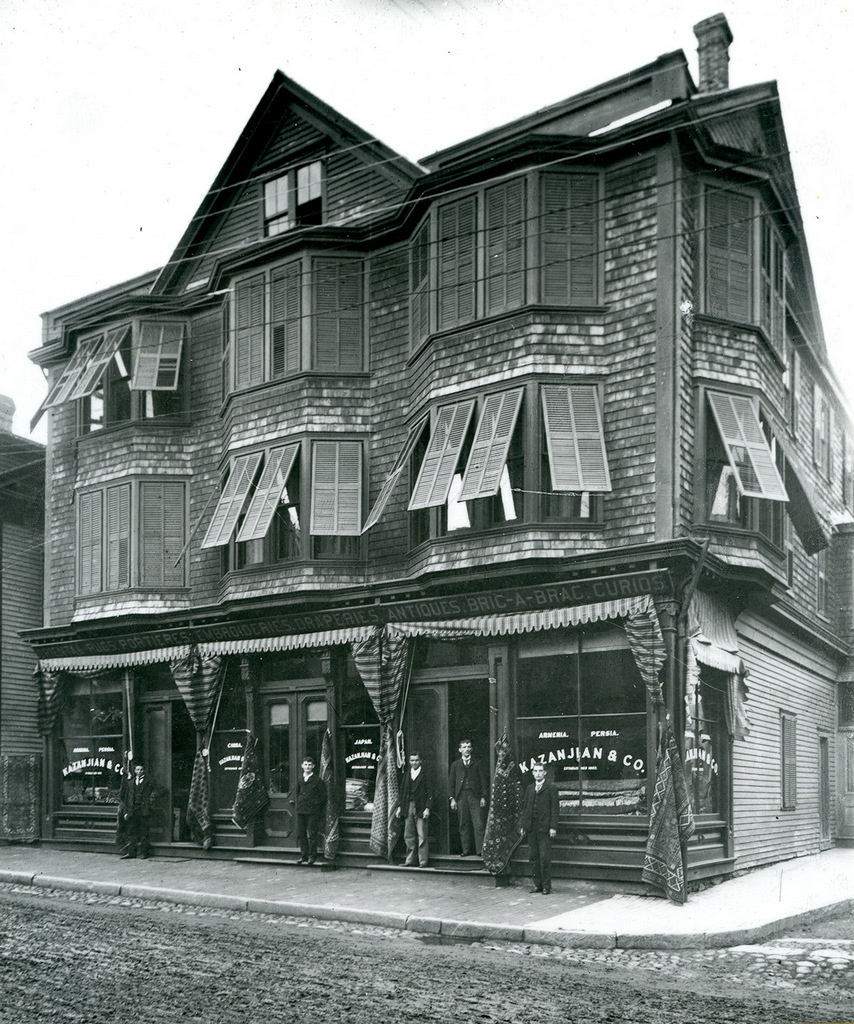
The commercial block at the corner of Bellevue Avenue and Deblois Street in Newport, around 1906. Image courtesy of the Providence Public Library.

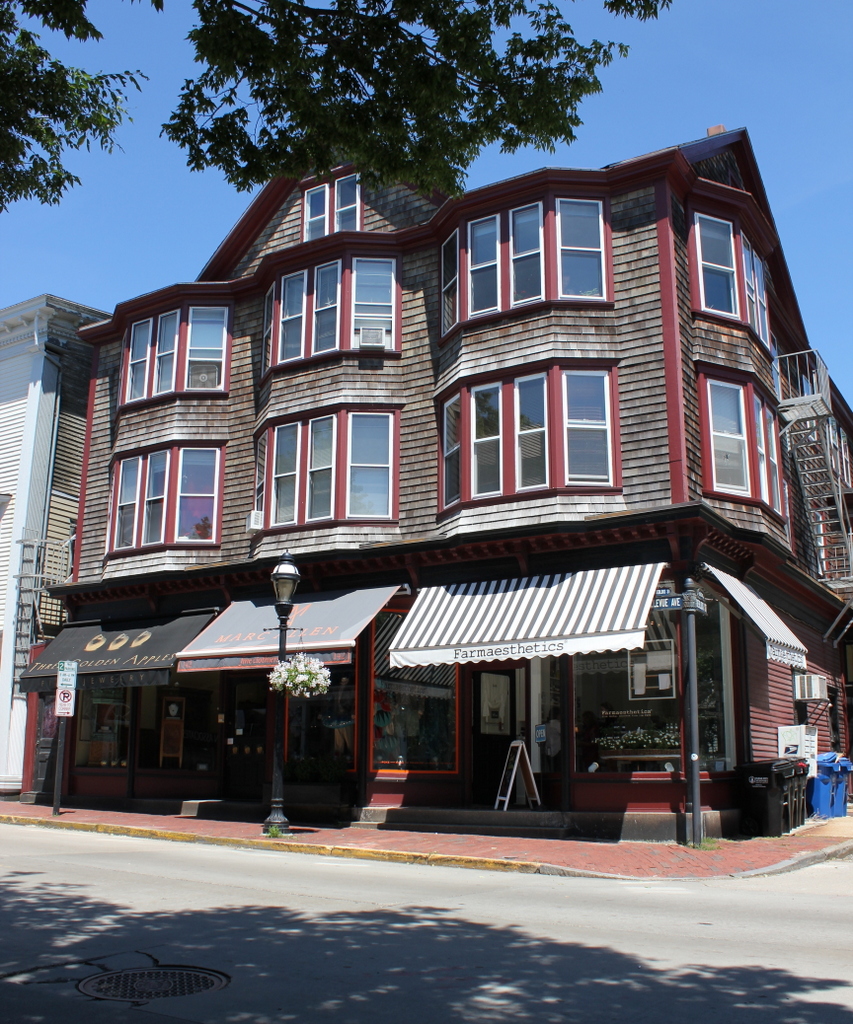
The scene in 2017:

In the late 19th century, Shingle-style architecture became virtually synonymous with New England coastal resort communities, and Newport featured many of the style’s pioneering works. Although this building can hardly compare to the Newport Casino or Isaac Bell House further up Bellevue Avenue, it nonetheless shows the style’s influence on local architecture. This particular building dates back to the 1890s, and was originally the home of the Kazanjian Company, a rug company whose store was located in the ground floor, as seen in the first photo.

The Kazanjian Company was founded in 1882 by Bedros and John Kazanjian, two brothers who immigrated to Newport from Armenia. City directories list their business here at this address throughout the 1880s, although the current building does not appear to have been built until the following decade. Either way, by the time the first photo was taken around 1906 they were selling a wide variety of household goods beyond just rugs. The sign above the first-floor windows advertises “Oriental rugs, portieres, embroideries, draperies,antiques, bric-a-brac, curios,” and some of their rugs are on display outside of the windows.

The Kazanjian family also operated a store nearby at the present-day corner of Bellevue Avenue and Memorial Boulevard, right next to the Newport Casino. Both of these stores would remain in business for many years, appearing in city directories into the 1960s. During this time, the upper floors were rented as apartments. The 1920 census, for example, shows seven different households, primarily single people and married couples with no children. The occupations were highly varied, and included workers at a dress shop, a photographer’s studio, a beauty shop, a grocery store, and the U.S. Navy base in Newport.

More than 110 years after the first photo was taken, Newport remains a popular coastal resort, and Bellevue Avenue is still a premier shopping area. Kazanjian & Company is long gone from here, and the building’s storefronts have seen some minor alterations over the years, but overall the building remains well-preserved. It is a mixed-use property still, with three stores on the first floor and apartments on the upper floors, and it is one of the many historic 19th century buildings that still line Bellevue Avenue.

Touro Synagogue, Newport, Rhode Island

The Touro Synagogue on Touro Street in Newport, sometime between 1870 and 1890. Image courtesy of the New York Public Library.

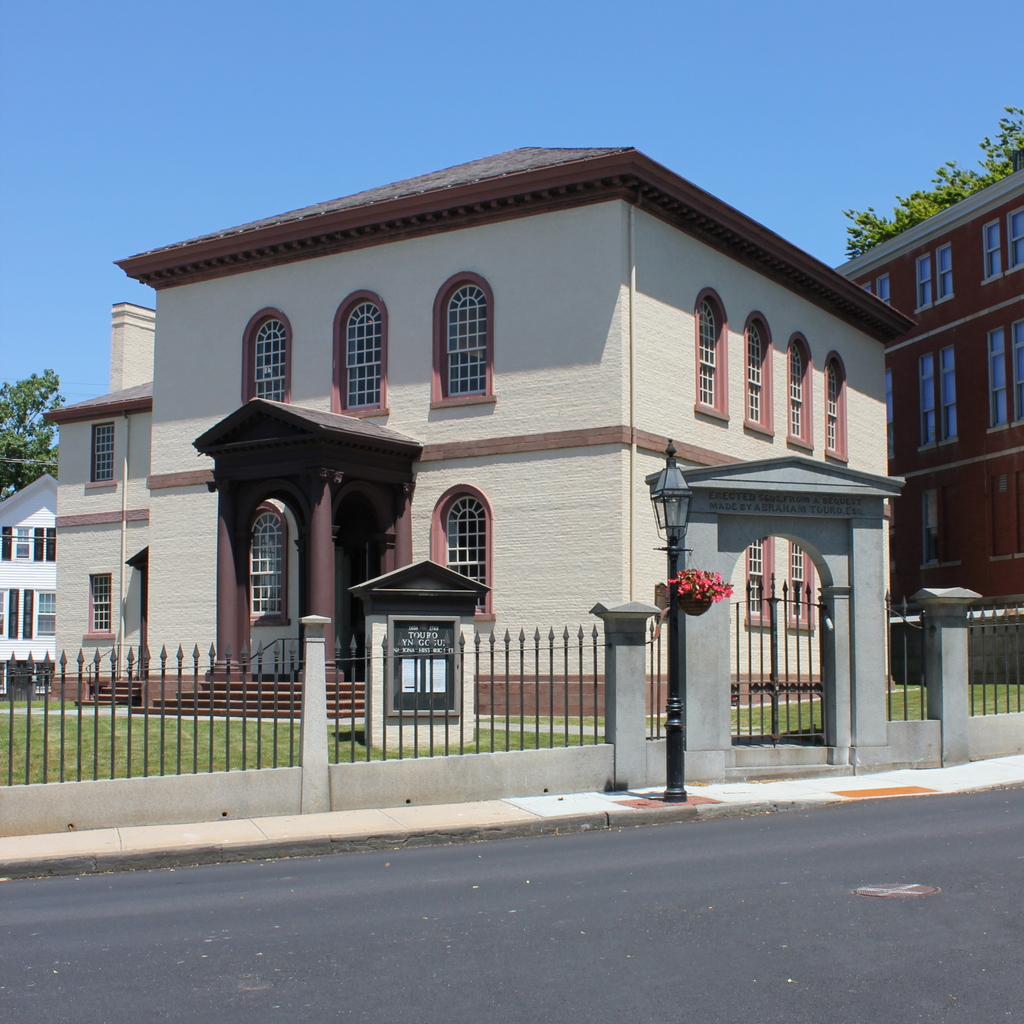
The synagogue in 2017:

Rhode Island was established by colonists seeking religious freedom, and for many years it was a haven for a variety of religious minorities. Some of the first Jewish settlers in the present-day United States arrived in Newport as early as 1658, and by the mid-18th century there was a sizable Jewish community here, drawn by both religious tolerance and business opportunities in the thriving seaport town. The decades prior to the American Revolution were Newport’s heyday as a commercial port, and one of the most prosperous merchants was Aaron Lopez, a Jewish immigrant from Portugal who arrived here in Newport in 1752.

Together with Rabbi Isaac Touro and other leading Jews in Newport, Lopez helped to establish this synagogue, and they hired architect Peter Harrison to design the building. Considered to be the first professionally-trained architect in the American colonies, Harrison designed several other buildings in Newport, including the Redwood Library on Bellevue Avenue and the Brick Market at Washington Square, and he also designed Christ Church in Cambridge and King’s Chapel in Boston. His synagogue, though, is considered by some to have been his finest work, since it demonstrated his ability to blend classical architecture with the specific requirements of Jewish tradition.

The synagogue was completed in 1763, right at the peak of Newport’s prosperity. However, the American Revolution began just over a decade later, causing a severe disruption of trade as well as a long British occupation of the town. Newport never fully recovered its prewar prosperity as a seaport, and many of the Jewish residents left during the war. Rabbi Touro fled to Jamaica at the start of the British occupation in 1776, and Aaron Lopez also left around the same time, moving first to Portsmouth and then to Providence and to Massachusetts. He lost much of his fortune in the war, and he ultimately died in 1782 while on his way back to Newport, when his horse and carriage fell into a pond in Smithfield.

With most of Newport’s Jewish population gone, the synagogue closed in 1791 and remained vacant for the next 60 years. However, it was not completely forgotten, and Isaac Touro’s sons, Abraham and Judah, both left large bequests to maintain the building. These funds enabled restoration projects in the 1820s and 1850s, as well as the granite and cast iron fence, which was built around the property in 1842. Beginning in the 1850s, the synagogue was used intermittently, as Newport started to become a popular summer resort community. In 1883, around the time that the first photo was taken, the synagogue was finally reopened on a permanent basis, nearly a century after the original congregation had left Newport.

Nearly 135 years later, this scene has not undergone any significant changes. The building is still an active synagogue, and it stands as a reminder of Newport’s former preeminence as a seaport and its tradition for religious tolerance. Architecturally, it is still well-preserved, and stands as one of the few surviving works of one of the country’s most important early architects. The building was designated as a National Historic Site in 1946, and in 1968 it became part of the Newport Historic District, a National Historic Landmark district.

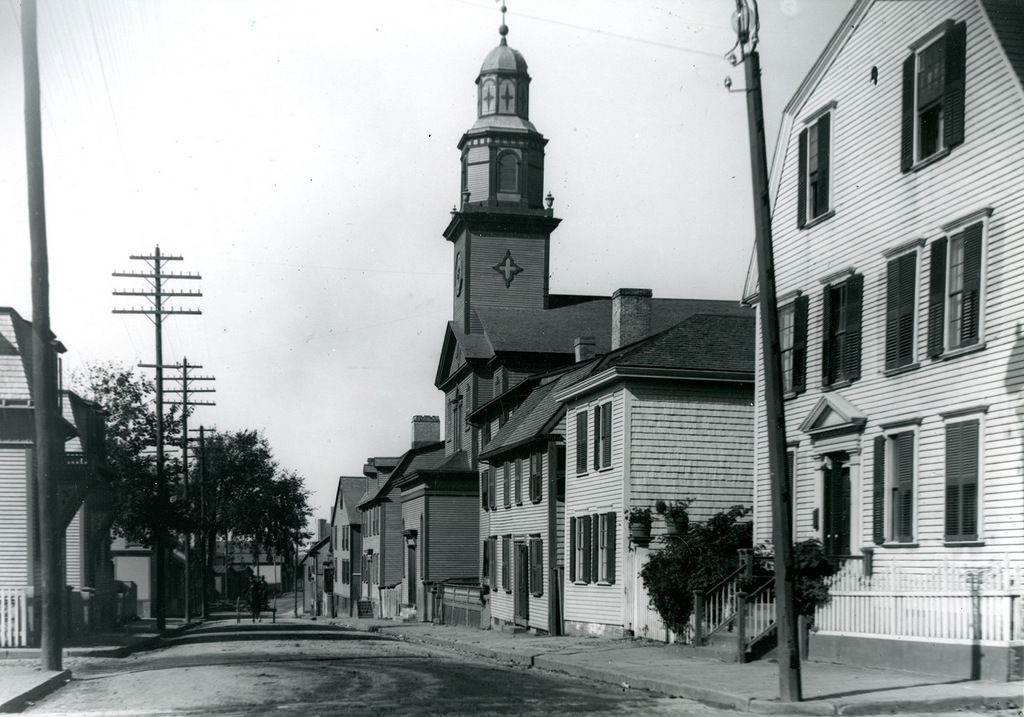
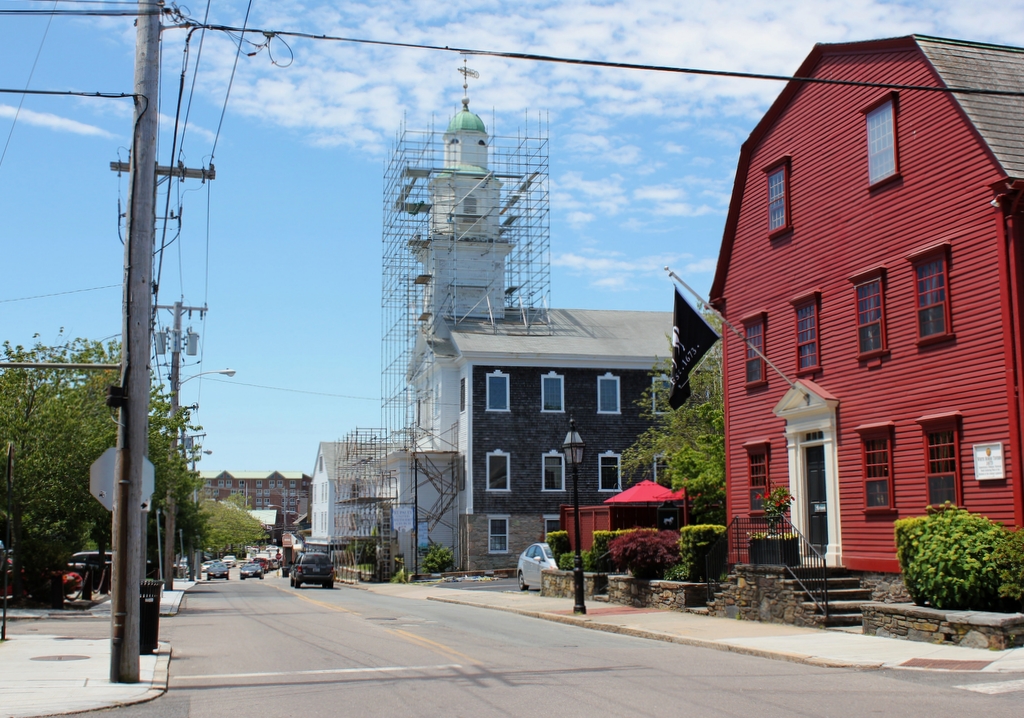
Marlborough Street, Newport, Rhode Island

Looking west on Marlborough Street from Farewell Street in Newport, around 1911. Image courtesy of the Providence Public Library.

The scene in 2017:

This scene on Marlborough Street includes several notable Newport landmarks, with the most significant being the White Horse Tavern on the far right. This building is perhaps the oldest in the city, dating back to before 1673. It was just a two-story, two-room house at the time, but it was later expanded, and by 1687 it was being operated as a tavern by William Mayes, Sr. His son, William Mayes, Jr., had a career as a pirate before returning to Newport, retiring from piracy, and taking over the operation of the tavern in 1703. Within a few years, though, his sister Mary and her husband, Robert Nichols, owned the property, and it would remain in the Nichols family for nearly two more centuries.

In the years before the Colony House was built in the 1730s, the colonial legislature often met here at the White Horse Tavern, which acquired its current name around this same time. Some 40 years later, it was used to house British soldiers during the American Revolution, and after the war the building was expanded to its current size, including the addition of the large gambrel roof. It would continue to be owned by the Nichols family until it was finally sold in 1895. The first photo was taken only about 16 years later, and at this point it had been converted into a rooming house.

The White Horse Tavern was already an old building in 1807 when the other prominent landmark in this scene, St. Paul’s Methodist Church, was completed. Long known for its religious tolerance, Rhode Island was among the first places where Methodism took root in America in the late 18th century. However, the Newport congregation caused a considerable stir in the Methodist community when they built this church. Although similar to other New England churches of the era, it was far more elaborate than the plain meeting houses that early Methodists worshipped in. It is considered to be the first Methodist church in America to have a steeple, bell, and pews, and early Methodist leader Bishop Francis Asbury is said to have “lifted his hands with holy horror when he first saw it and predicted that a church which began with a steeple would end with a choir and perhaps even an organ.”

Bishop Asbury was ultimately proven right in his prediction about the organ, with the congregation installing one in the church in the 1850s. However, an even more significant change had come about 15 years earlier in 1842, when the entire building was raised eight feet and a new, full-story foundation was built beneath it to make space for a parish hall. Otherwise, the exterior of the church has not significantly changed, although the building was heavily damaged by a fire in 1881. However, it was subsequently restored, and the first photo was taken about 20 years later.

In more than a century since the first photo was taken, most of the historic buildings on both sides of Marlborough Street have been demolished. Even the White Horse Tavern itself was threatened with demolition. Badly deteriorated and neglected more than 50 years after it became a rooming house, it was nearly demolished in the 1950s to build a gas station here on the corner. Instead, though, it was purchased by the Preservation Society of Newport County, who restored it and reopened it as a tavern in 1957. It remains in operation today, and is marketed as America’s oldest tavern. Further down the street, St. Paul’s Methodist Church is also still standing, and still houses the same congregation. The 2017 photo shows it in the midst of a restoration project, but otherwise it is largely unchanged from the first photo, and both it and the White Horse Tavern are now contributing properties in the Newport Historic District, which is a National Historic Landmark district.